Airport status
See how every airport is running, right now.
Flying shows disruptions and delays at airports around the world, plus security waits at US airports, updated in real time, so you know what to expect before you head out.
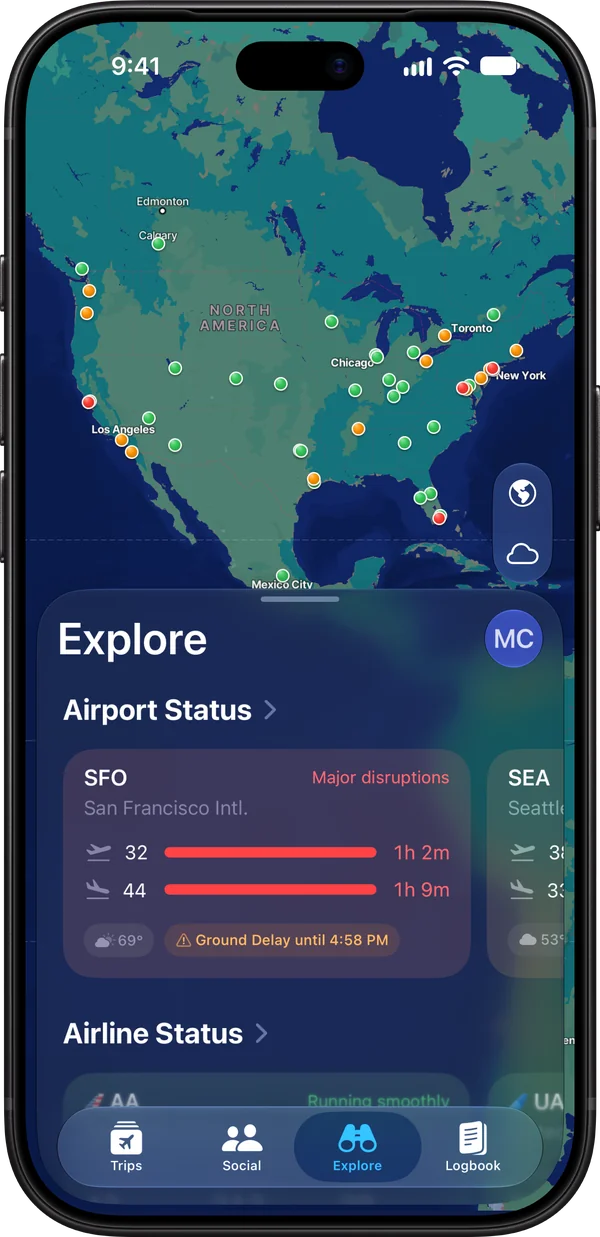
Most disrupted airports right now.
Live from Flying. Tap an airport for its full status.
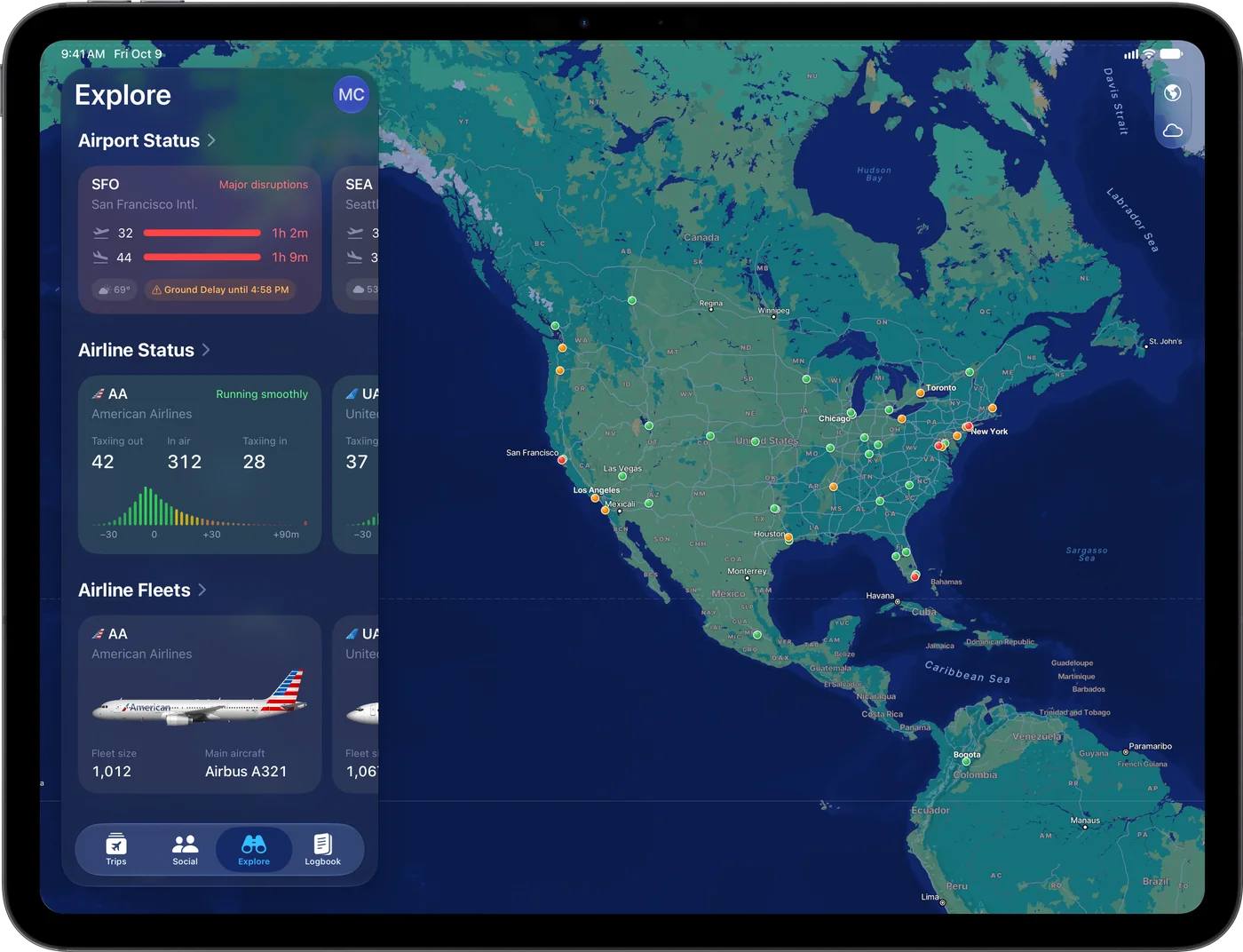
Disruptions everywhere, at a glance.
See which airports are having trouble right now and how long the delays are, from the biggest hubs to regional airports around the world. Departures and arrivals are tracked separately, since an airport can be landing flights on time while its departures are held.
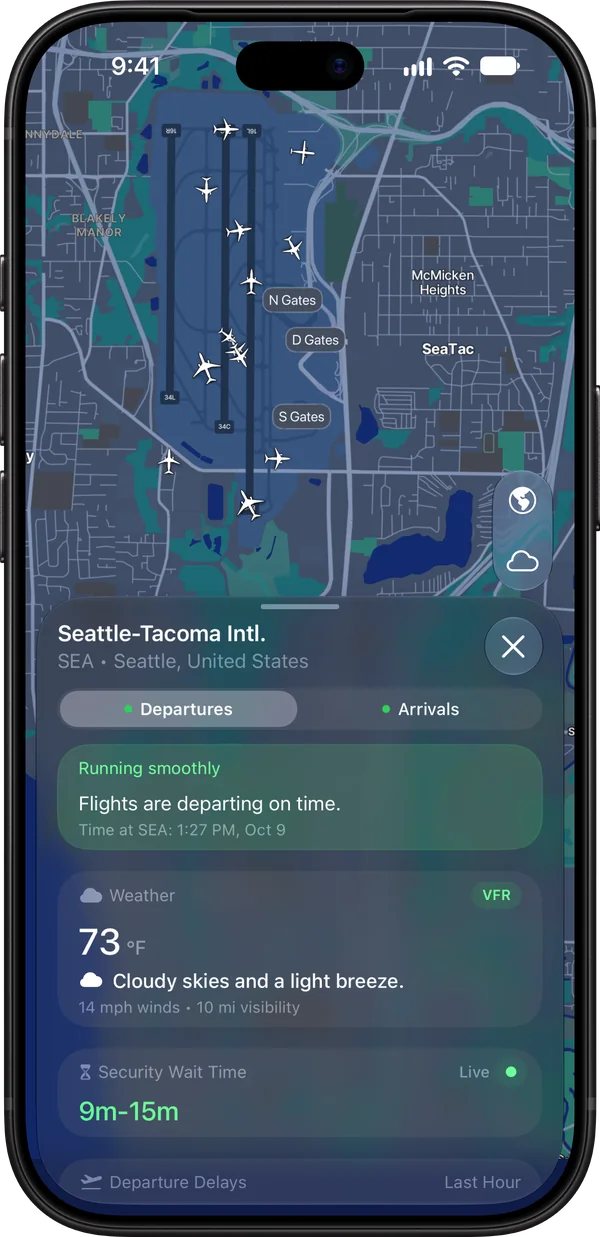
Every detail, airport by airport.
Live traffic on the map, departure and arrival delays, cancellations, and an hour-by-hour look at how the last 12 hours unfolded. The weather comes in plain language, with the raw METAR and TAF for pilots, and US airports add security wait times.
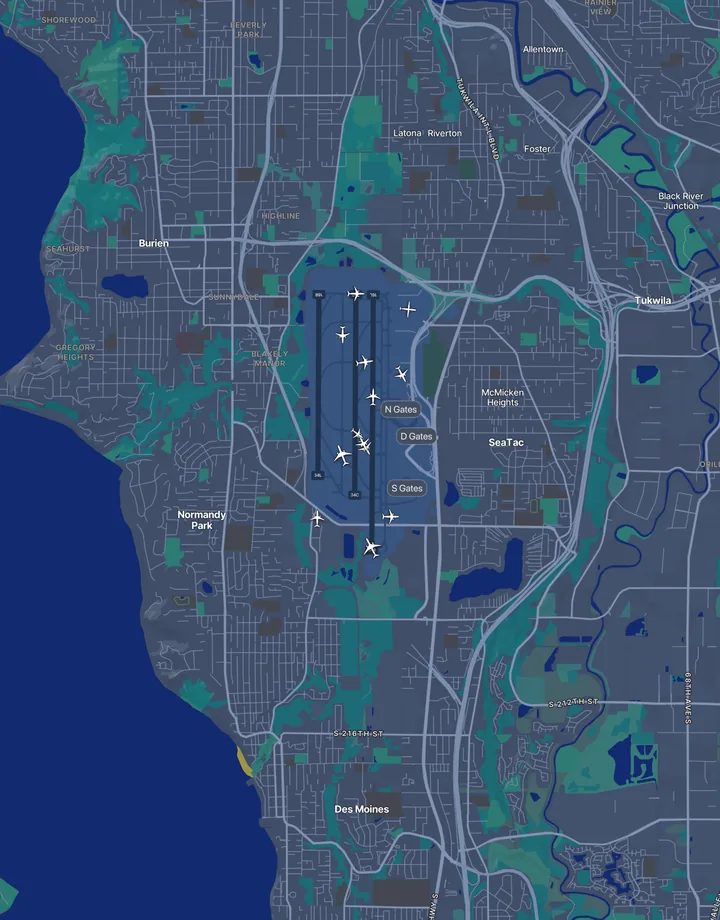
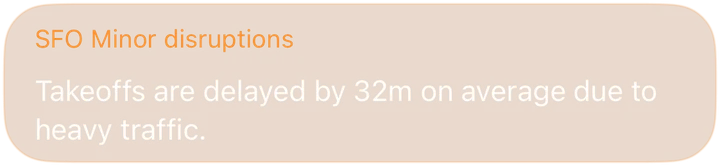

Know why, not just how long.
At US airports, Flying turns the FAA's own advisories into plain English, with local times, like “Departing flights are being held by ATC until 8:30 PM local time due to nearby thunderstorms.”
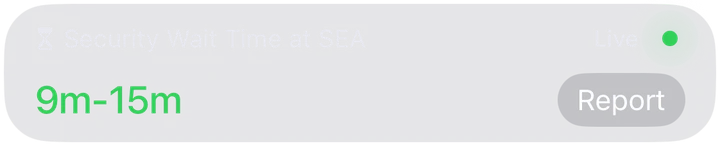
Check the line before you leave.
At US airports, see typical security waits for the day and hour you fly, including TSA PreCheck and CLEAR lines, and live waits at select major airports, so you know when to head out.
Built on real-time data.
At US airports, Flying gets ground stops and delay programs from the same FAA data feed airline operations centers use. Everywhere, delays and cancellations come from a continuous stream of live airline flight movements, not user reports.
Airport status questions, answered.
Which airports does Flying cover?
Airports around the world, from the biggest hubs to regional airports. For each one, Flying shows how departures and arrivals are running, how long the delays are, cancellations and diversions, and the weather. At US airports, it also shows FAA ground stops and delay programs, the reason for delays, the runways in use, and security and customs wait times.
Where does the airport status come from?
At US airports, Flying gets ground stops, delay programs, and runway changes from the same FAA data feed airline operations centers use, seconds after they're issued. Everywhere, it recomputes delays and cancellations every 5 minutes from a continuous stream of live airline flight movements, and adds official airport weather reports every 10 minutes. Security and customs waits come from official TSA and CBP averages, with live waits at select major US airports.
What causes airport delays?
Common causes include weather, like thunderstorms, low clouds, and strong winds, and heavy traffic, when more flights are scheduled than an airport can handle at once. Air traffic control staffing, runway construction, a disabled aircraft, and even wildlife on the airfield can slow things down too. At US airports, Flying shows the most likely cause in plain English, based on the FAA's own advisories.
How can I tell if my flight will be delayed?
Check both ends of your trip. Delays at your departure airport hold up takeoffs, and at US airports, a ground stop or delay program at your destination can keep your flight at the gate before it ever leaves. Flying shows departures and arrivals separately for both airports, and the app tracks the plane flying in to operate your flight, so you can often see a delay coming early.
What's a ground stop or a ground delay?
Both are ways the FAA manages traffic when an airport can't handle all its flights, often because of weather. In a ground stop, flights headed to that airport are held at their departure airports until it ends. In a ground delay program, flights are given later departure times, so they wait on the ground instead of circling in the air. At US airports, Flying shows ground stops and delay programs as the FAA issues them, with the expected delay and when they end.
How early should I get to the airport?
Airlines commonly recommend arriving about 2 hours before a domestic flight and 3 hours before an international one, but the security line is the biggest variable. At US airports, Flying shows typical security waits for the day and hour you fly, including TSA PreCheck and CLEAR lines, and live waits at select major airports, so you can plan around the actual line.
Know before you go.
Get live airport status, flight alerts, and more with Flying on iPhone, iPad, and Mac.
Download on the App Store